


Geology - Maloja
Glaciers and glacial potholes in Maloja
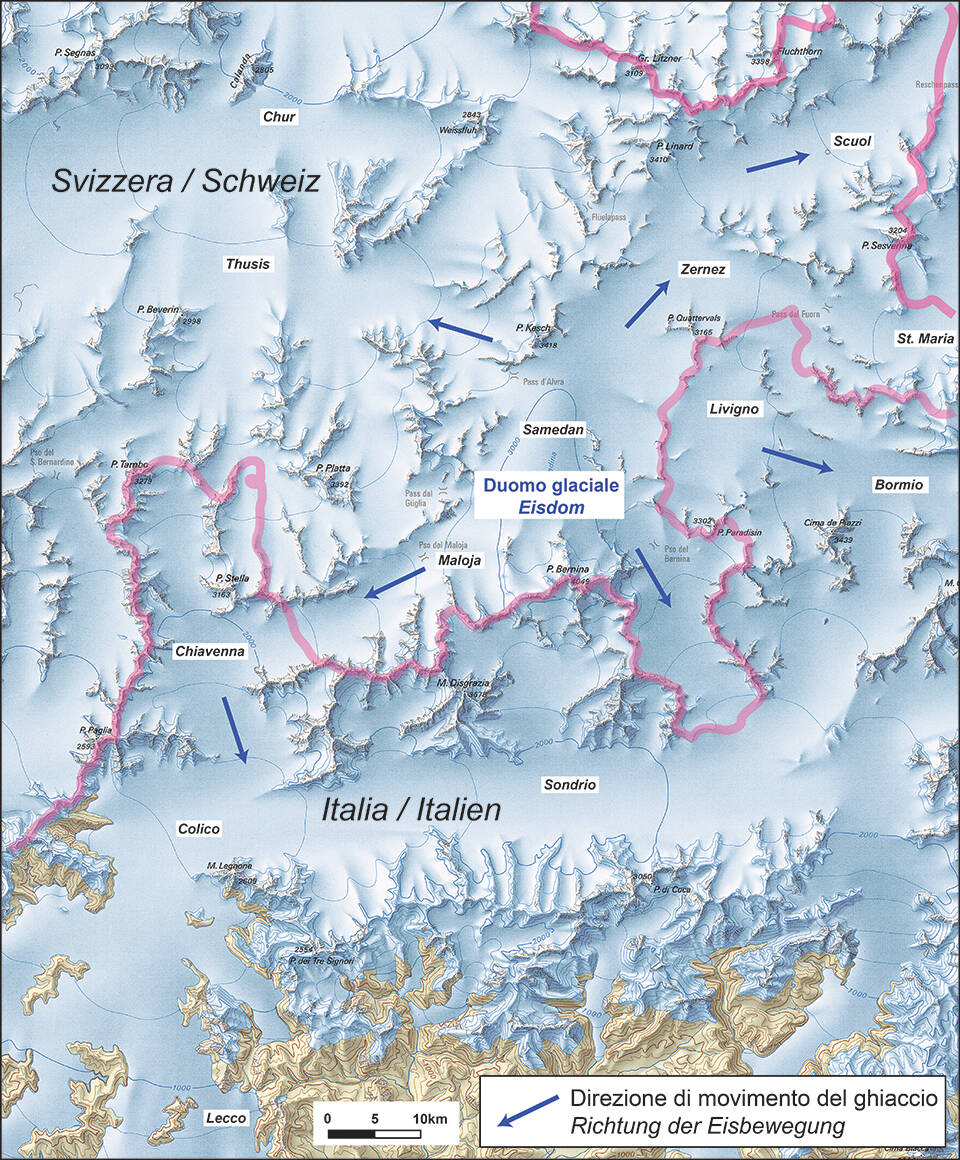
Reconstruction of the distribution and thickness of glaciers 24.000 years ago
Standing here 24.000 years ago, at the height of the last glacial maximum, you would have been under almost a kilometre of ice. At that time, most of Switzerland was covered by ice, which was moulding the landscape we see today.
As the glaciers retreated—a process that continues today under the influence of global warming—they left behind telltale signs of their erosive power: large valleys and glacial lakes, huge accumulations of debris and moraine, and sculpted rock formations, including the characteristic glacial potholes that can be explored here.
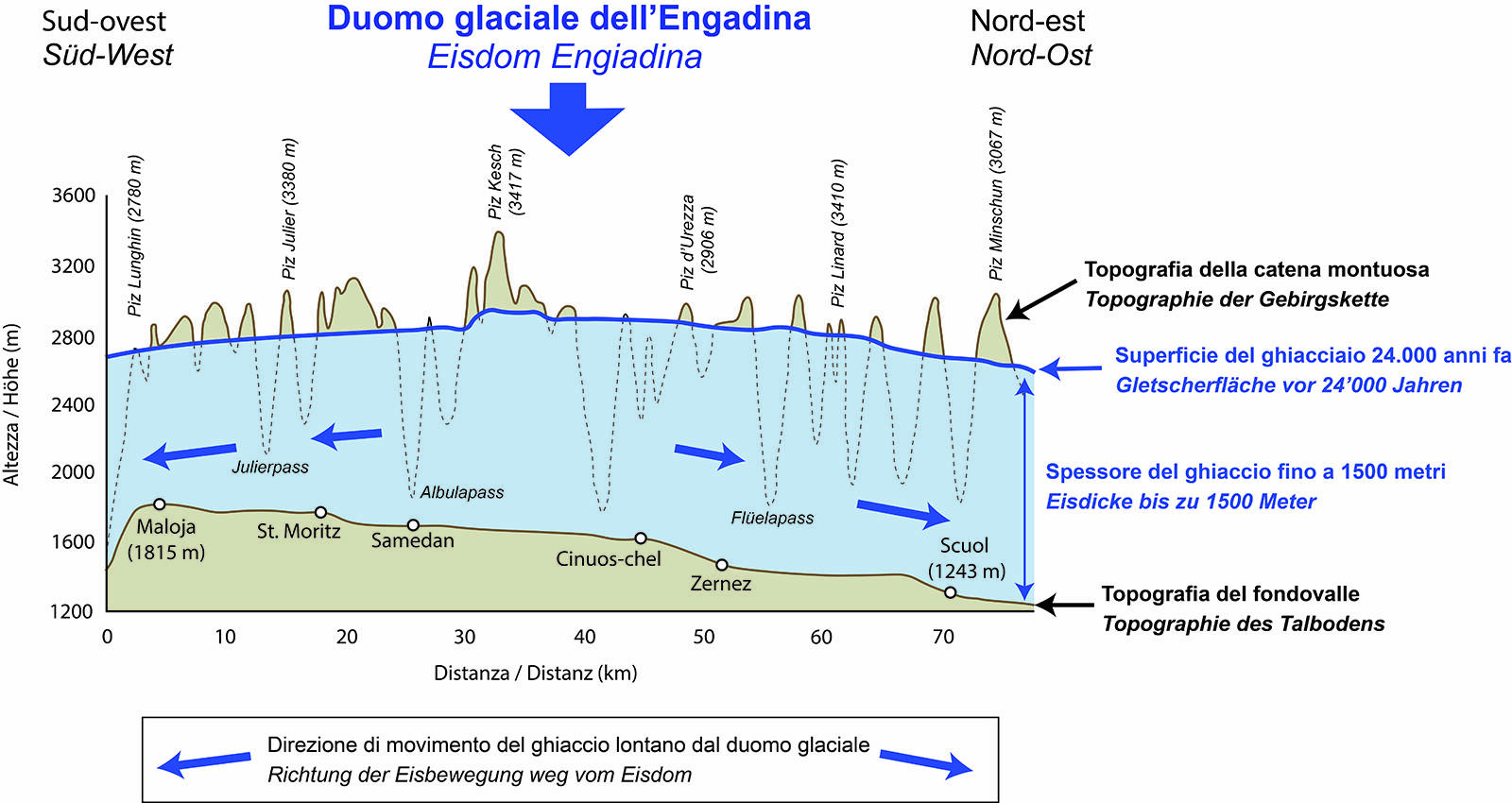
Engadine ice dome
24.000 years ago, the area around St. Moritz, Samedan and Pontresina was covered by the Engadine Ice Dome, a dome-shaped mass of ice more than 1.500 metres thick. The surface of the ice dome was at an altitude of about .3000 metres. From there, huge glaciers flowed outwards in different directions: west to Val Bregaglia, northeast to the Lower Engadine, south to Val Poschiavo, and northwest to Surselva. The glaciers were so thick that only the summits of the highest peaks emerged through the surface of the ice.
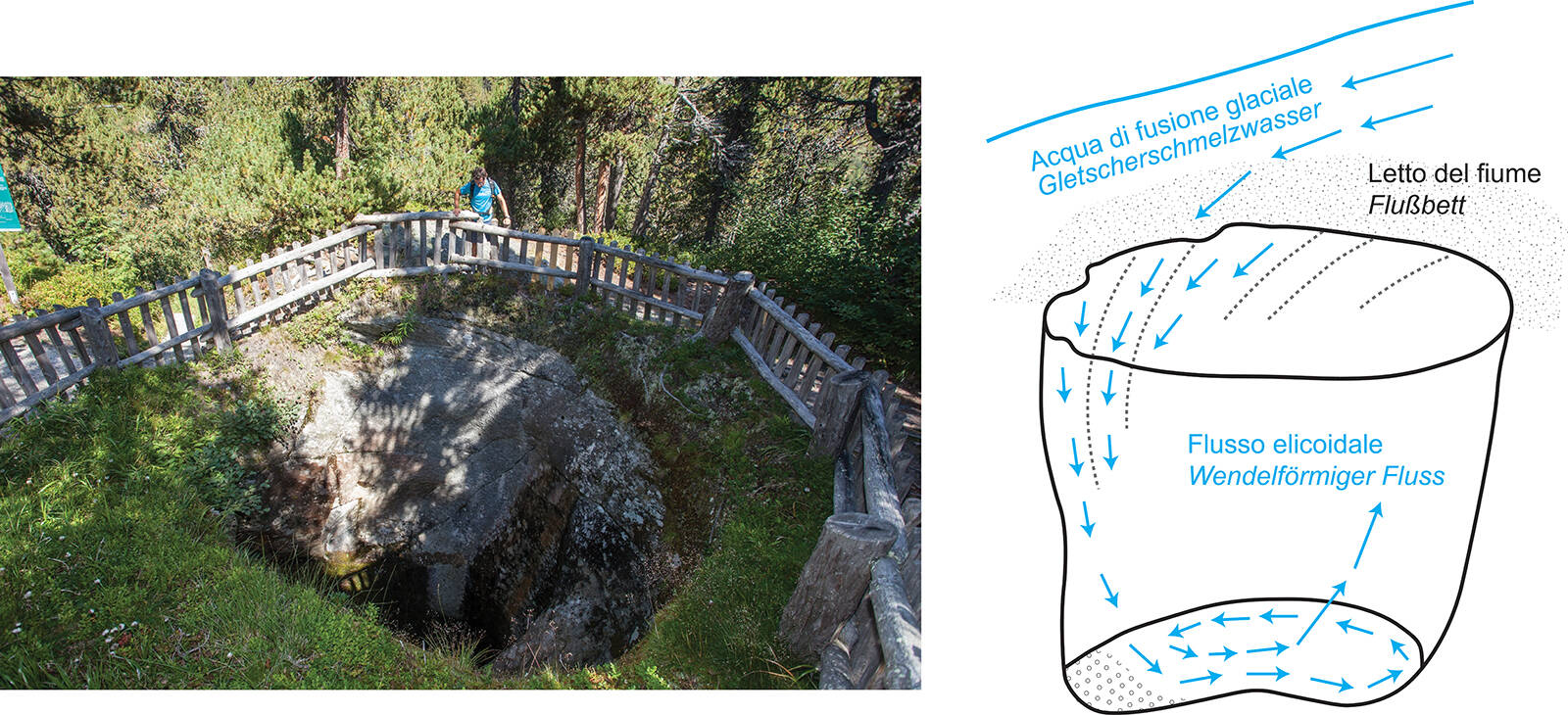
Glacial potholes
During construction of the Torre Belvedere, several glacial potholes were discovered – a total of 36 have now been identified. As you walk through the forest, note the characteristics of the potholes: they are several metres wide, up to 10 metres deep, and are cylindrical in shape with smooth, rounded walls. Some of the potholes are filled with water, while others have large boulders at the bottom. The potholes formed in a hard type of bedrock called gneiss. What processes could create such large potholes in solid rock?
Geologists believe that the potholes were formed by fast-flowing rivers carrying glacial sediments (sand, gravel and boulders). The rivers may have been under the thick glacier that covered Maloja 24.000 years ago, or they may have formed more recently as the glacier melted and retreated. The sediment-laden glacial water, moving in a spiral motion, carved the deep cylindrical holes that you see.