


Geology Bregaglia - Roticcio
The Bergell pluton: a jewel in our geological crown
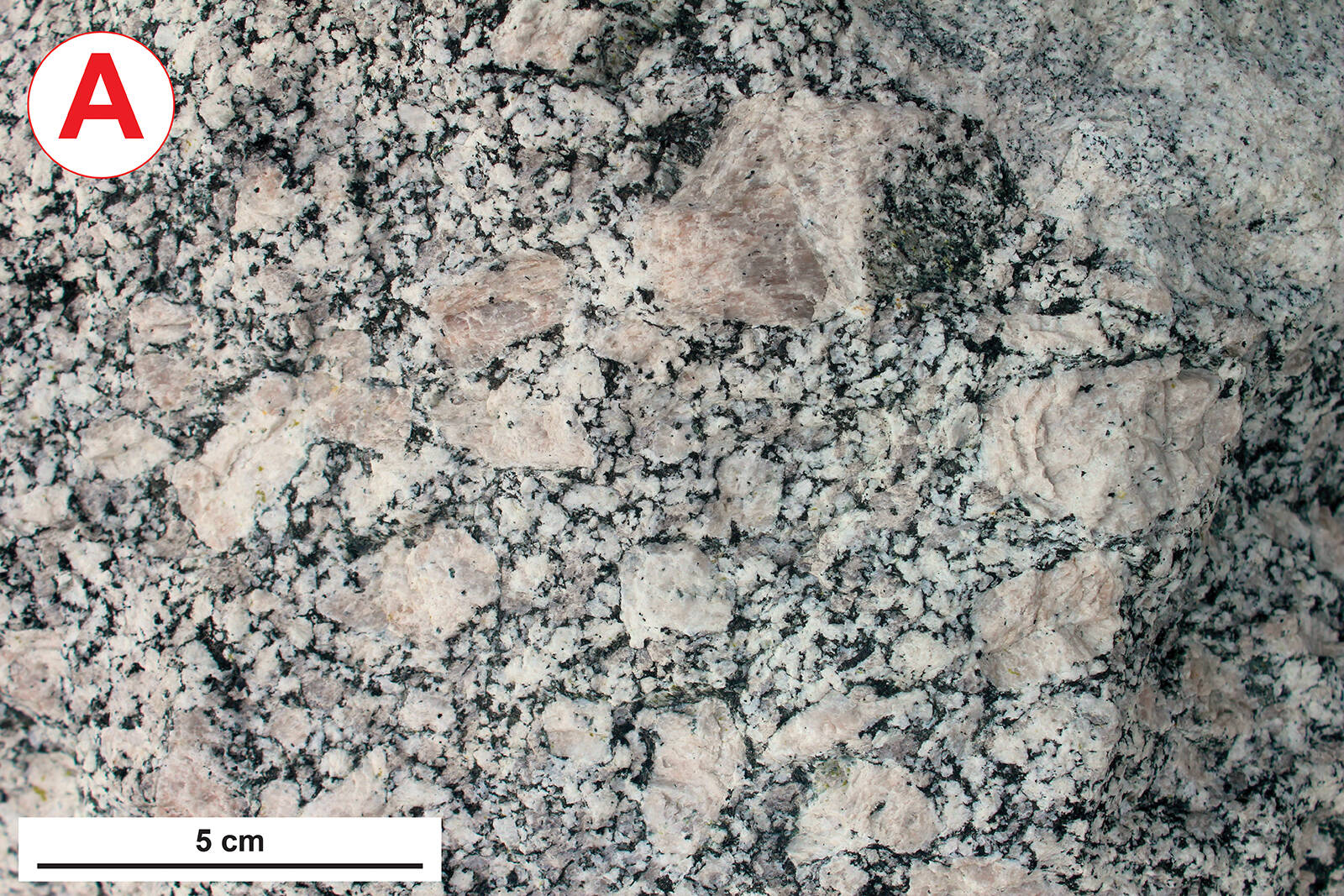
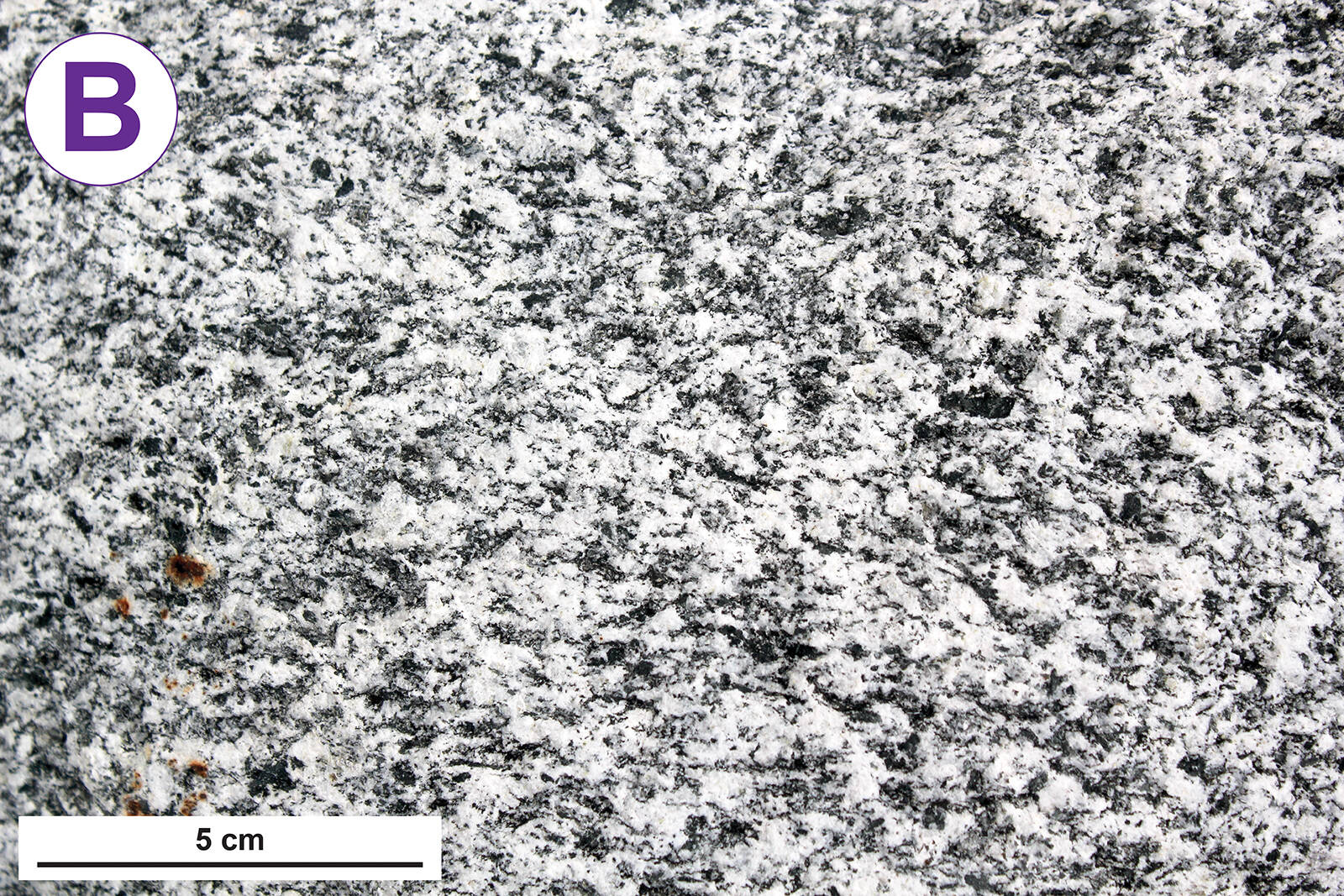
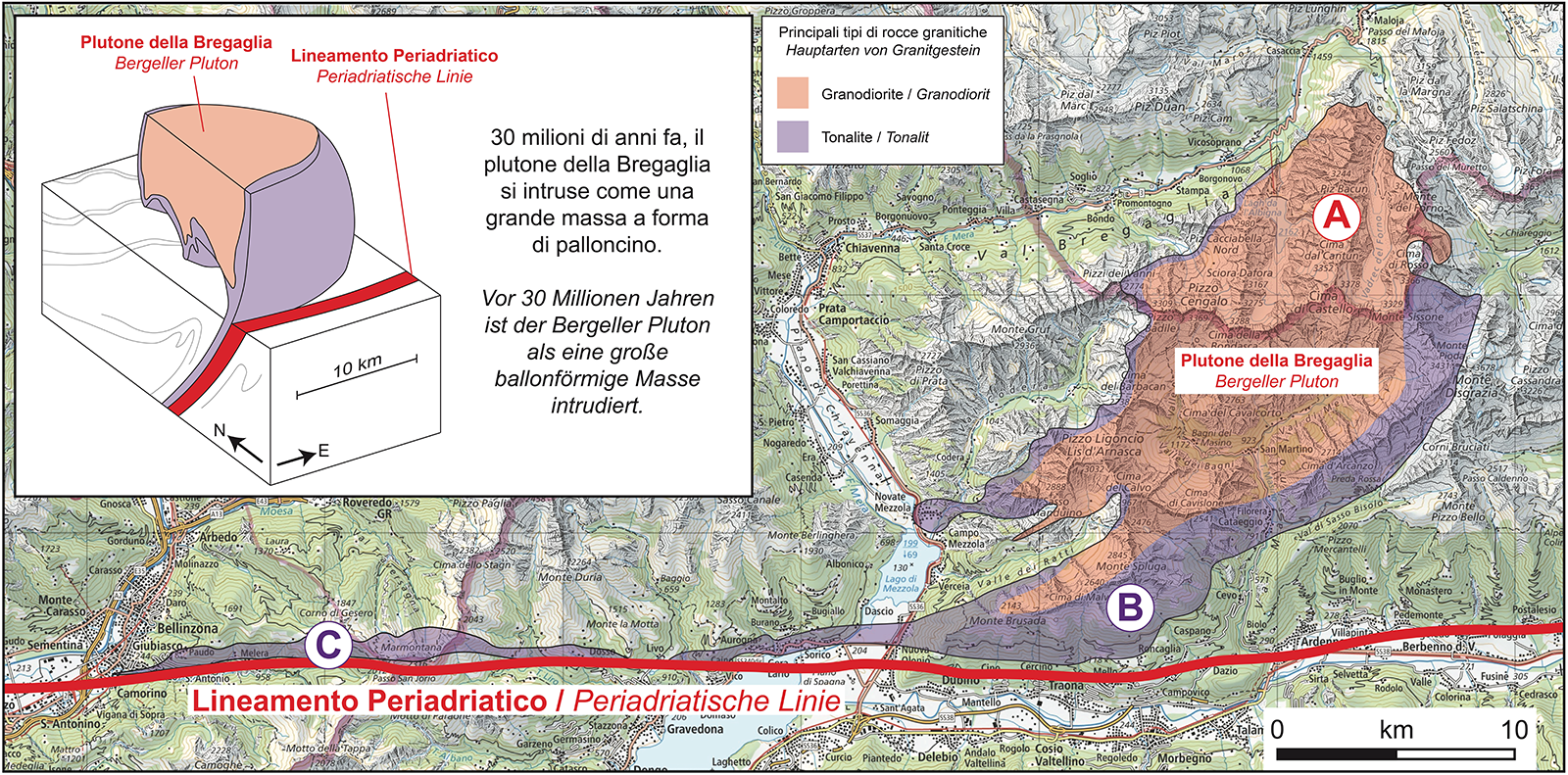
Famous among climbers and alpinists worldwide, the granitic rocks on the southern side of Val Bregaglia are part of a huge igneous intrusion called a pluton. Covering an area of 250 km2, the Bergell pluton is the second largest in the Alps, extending as far south as Valtellina, with a long “tail” extending 40 km west to Bellinzona in Ticino. The pluton consists of two main types of granitic rock: the main body is made of granodiorite (red on the map and photo A), while the edges and the tail are made of tonalite (purple on the map and photo B). The pluton formed 30 million years ago when the Alps were growing due to the tectonic collision between the ancient European and African continents. Magma from deep within the Earth’s crust travelled upwards along a large fault known as the Periadriatic Line. When the magma reached a depth of around 15 km below the Earth’s surface, it spread and intruded into the surrounding rocks forming a huge, balloon-shaped pluton. Over time, the magma gradually cooled and crystallized to form solid rock.
The map and cartoon show the shape of the Bergell pluton, which is the second-largest pluton in the Alps. Around 30 million years ago, magma intruded along a large fault known as the Periadriatic Line. At a depth of around 15 kilometres below the Earth’s surface, the magma formed a huge, balloon-shaped mass that gradually cooled and crystallized to create solid rock.
Main rock types in the Bergell pluton
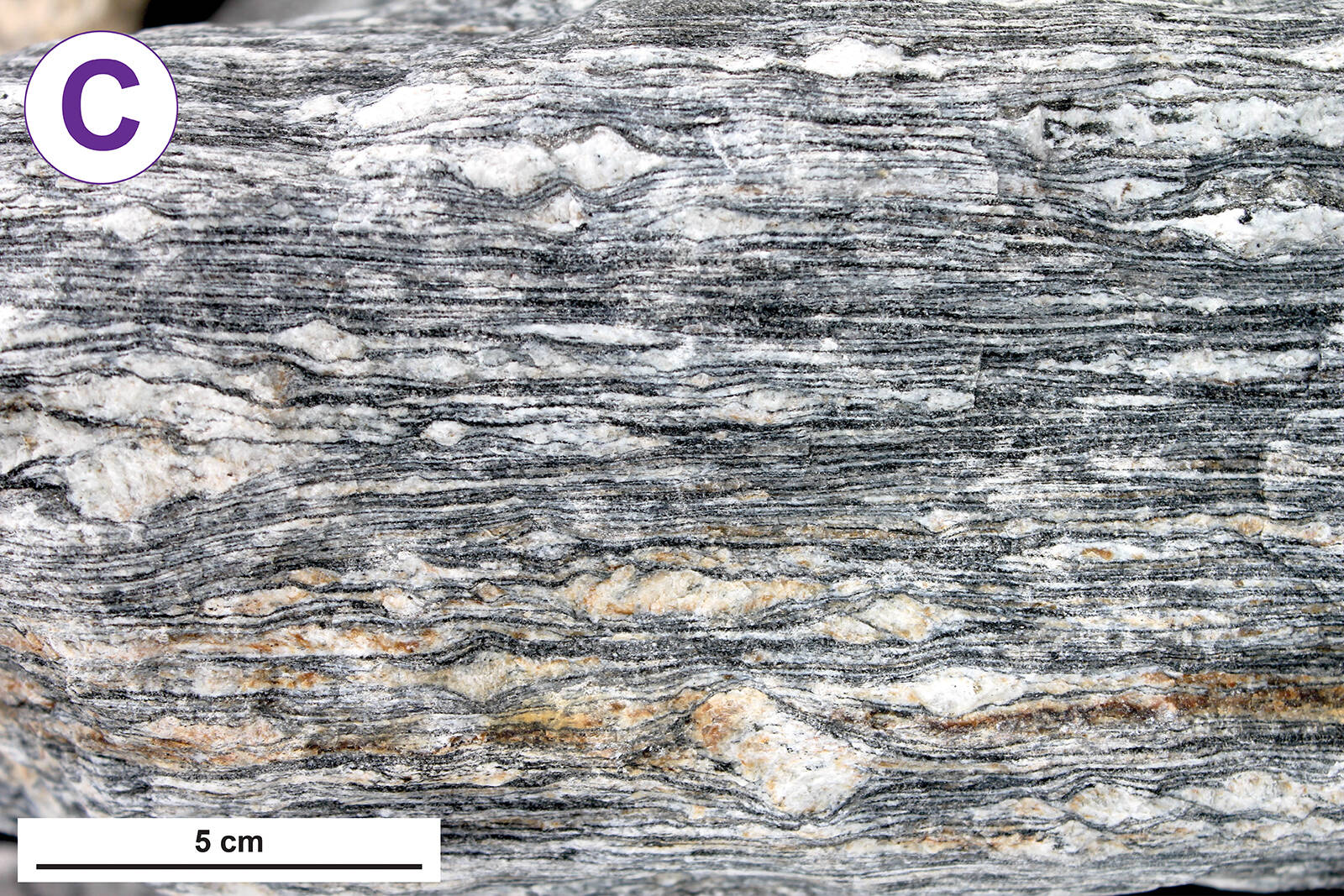
Igneous rocks are composed of various minerals that crystallize from magma. Geologists classify igneous rocks into different types based on the type and abundance of these minerals. The granodiorite that dominates the main body of the Bergell pluton is characterized by large crystals of potassium feldspar, some of which are up to 10 cm in size (photo A). These crystals are surrounded by plagioclase, quartz and biotite. In contrast, the tonalite at the edges of the pluton comprises plagioclase, quartz, hornblende and biotite, but lacks the large potassium feldspar crystals present in the granodiorite (photo B). Along the Periadritic Line, the tonalite was squeezed and stretched to form a special type of deformed rock called a mylonite (photo C).